Let’s take a look at the Inhumane Technology Crisis we are in, but first, let’s get some definitions out of the way…
-
Inhumane Technology: Technology that uses/exploits humans as tools for the purpose of making a business profitable or conducting a nefarious objective—at the expense of human wellness and/or societal strength. 🙁
-
Humane Technology: Technology that humans use as a tool to serve human needs and regards human wellness and societal strength. 🙂
-
Attention-Algorithm (AA) Social Media: Social media platforms that aim to maximize individuals’ attention (engagement) on those platforms by deploying attention-maximizing artificial intelligence (AI) algorithms that have no moral compass—for profitability or nefarious objective. AA social media yields platform addiction, harm to individuals, and harm to societal fabric. AA social media is inhumane technology.
The Problem
Individualized Human-Hacking
AA social media’s attention-maximizing AI algorithms learn an individual’s emotional and behavioral characteristics to individualize that individual’s experience on the platform for the goal of maximizing their attention. This makes content more about what an individual can’t look away from than about what an individual wants to see. We used to hear about humans hacking computers; now, computers hack humans—often with those humans not knowing it.
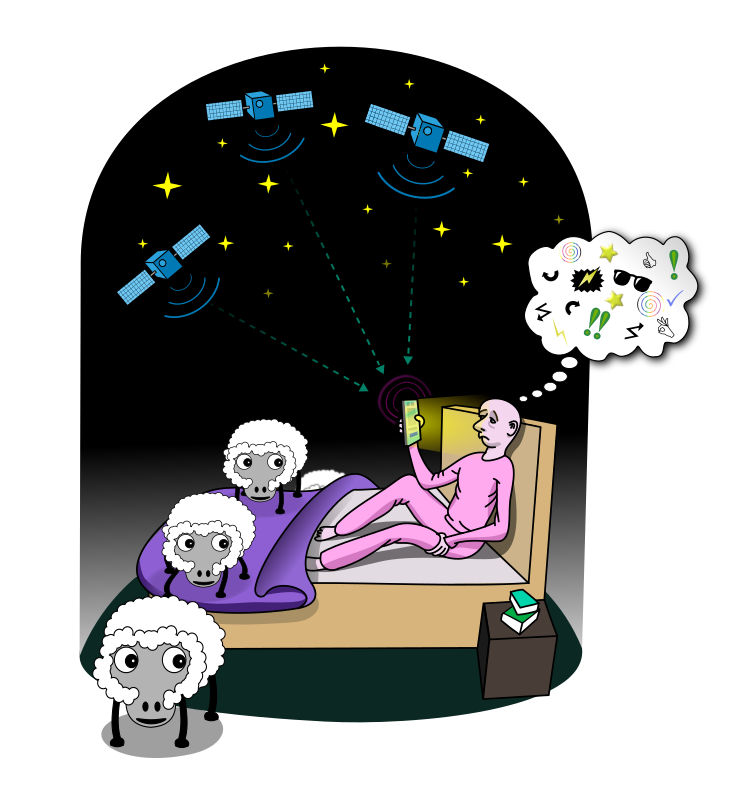
It would be a fallacy to say that AA social media is nothing new—that a lot of media has always been crafted for attention grabbing.
In the old media realm, the viewer/listener can avoid certain channels and, generally everyone in the same geographic/demographic segment receives the same content on a particular channel. AA social media learns an individual’s psychology to individually target that individual with an experience that keeps their attention. Targeting a marketing strategy to a particular geography/demography is one thing; micro-targeting to an individual’s psyche is very different—it crosses the line into inhumane technology.
Not only is the individual micro-targeted, the individual is micro-targeted with content that can be misinformation or disinformation (e.g., intentionally-false information, misleading information, or disinforming pictures/videos—sometimes generated by AI, as in deep-fakes).
We used to hear about humans hacking computers; now, computers hack humans—often with those humans not knowing it.
Inverted View of Society
Content shown on AA social media can paint a narrative that says there aren’t many individuals near the center of the political spectrum anymore—that society is mostly polarized. However, discussion with friends, family, and neighbors and looks at polls can reveal that society isn’t as polarized as content on AA social media shows it to be. While there is increasing polarization (polls do show that), there still are many individuals near the center.
However, collaboration, compromise, and moderation are boring. AA social media inverts the ground truth, accentuating extremes—areas with high engagement potential. It shouldn’t be surprising that politicians are increasingly speaking to the extremes (some elected officials have even been known to re-share disinformation found on AA social media); that’s where the attention/exposure is. Charged emotions like moral outrage 🔥 from algorithmically-presented bits of content or echo chambers (presenting more of the same to keep an individual on the screen) support engagement; where there’s engagement, there’s attention/exposure. Anger can be very exciting and stimulating. Here’s a 4-minute news video on the culture of outrage.
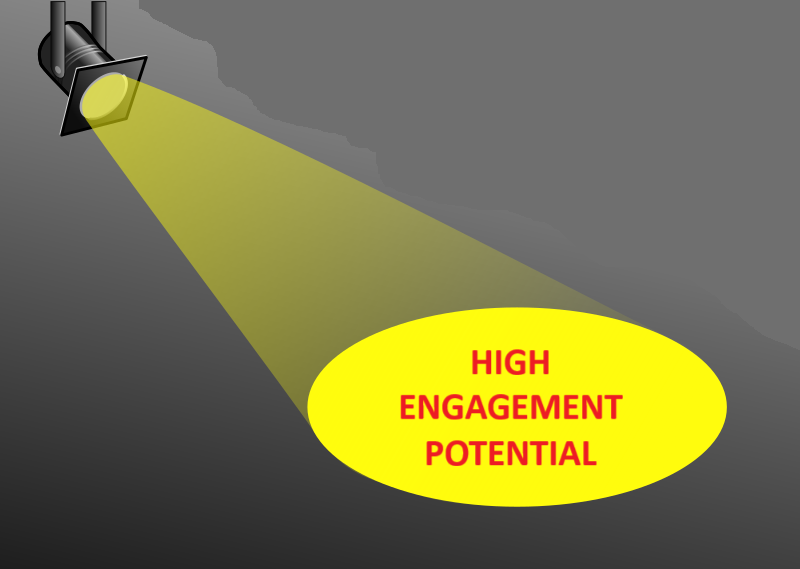
This slows the political process way down (as if it were fast to begin with) and feeds the culture war.
A culture war is what happens when disagreement on an issue (or perceived issue) becomes more about disagreement, division, sense of belongingness, us-vs.-them, and/or style than about the actual issue (or perceived issue).
How long will it take until the view of society shown on AA social media becomes close to reality? Let’s hope society turns it around; however, currently, the trend is going the wrong way.
It shouldn’t be surprising that AA social media is used for nefarious objectives by foreign adversaries. For example, in one instance, thousands of posts on a social media platform have been found to be created and designed in a foreign country with the goal of influencing a U.S. election through polarizing content. What better tool is there for dividing a society? What better tool is there for piping disinformation, propaganda, and persuasion?
Ironically and interestingly, the crisis of inhumane technology is something that can get rare bi-partisan support; for example, in 2024, the KOSA (Kids Online Safety Act), was passed in the U.S. Senate 91-3 (then stalled in the U.S. House of Representatitves).
Frictionless Sharing
 Content with high engagement potential spreads very quickly with frictionless sharing social-media design. Frictionless sharing is where content can be re-shared via one tap/click, sometimes even without the full underlying content (context) being displayed and read. Outrageous disinformation travels much faster than boring real news.
AI, AA Social Media, and Climate Change
Just as climate change causes more extreme weather events, AA social media creates an environment for more extremism.
And speaking of climate change, AA social media is arguably not green technology. With AA social media, an individual is on one side of the screen and on the other side are data centers (farms of AI servers that require air conditioning), working hard at maximizing that individual’s attention; multiply that interaction by hundreds of millions of individuals. Is that a good use of energy?

Just as climate change causes more extreme weather events, AA social media creates an environment for more extremism.
The AI Issue Isn’t New
Think about the state that society is in now. Then, if you are old enough to remember, think back to 2010. What was the state of society then? See the sharp contrast? In the post-2010 world, the fabric of society is being eroded, we are more polarized, extremism is amplified while truth (it’s boring) is quiet, and our youth are suffering with more depression and anxiety.
So, what’s significant about 2010? AA social media activity ramped up in the late 2000’s, when more smart phones went into pockets and the internet and computing devices became more ubiquitous. By around 2010, AA social media really took off.
It’s laughable when AI is suddenly talked about as if it’s something new that’s going to dramatically impact us. It already has; since around 2010, AA social media has:
-
increased polarization of society,
-
eroded societal fabric,
-
created, grown, and monetized hate/extremisms, and
-
has fostered a public health crisis.
It’s laughable when AI is suddenly talked about as if it’s something new that’s going to dramatically impact us. It already has…
AA social media was our first encounter with AI—and it’s a tragedy. Why should we believe the next encounter will go well—given our current trajectory?
It’s gotten to the point where we have a Social Media Harms Victim Remembrance Day and a Social Media Victims Law Center.
The 20th Century ended with the information age; the 21st Century is starting out as a disinformation age.
It’s Not About Free Speech
It’s also laughable when AA social media is discussed as something that’s supposed to facilitate free speech or something that’s supposed to function as a town square. AA social media isn’t about free speech—it’s a business (and a harmful one). AA social media can never be a town square.We hear a lot about content moderation. Yes. Content moderation is very necessary. However, the attention algorithms should be in focus. Content can be chiseled forever and the exact line for chiseling is forever elusive. The attention algorithms that pick up and promote harmful content are a lionshare of the problem.
An example of free speech is two individuals having a conversation in a neighborhood street; if one of them says something outrageous, it typically stays right there and the rest of the world doesn’t know.
Take that example to the AA social media realm. AA social media would take that outrageous statement and expose it 📣 to certain individuals in other streets out there across its universe, again, with the goal of keeping/monetizing those individuals’ attention.
Also, in the AA social media realm, it’s not always an individual human making those attention-keeping outrageous statements; it can be a bot that exists for a nefarious objective. For example, in one instance, a social media company found that 18% of its accounts are fake.
AA social media isn’t about free speech—it’s a business (and a harmful one). AA social media can never be a town square.
AA Social Media Isn’t Our World
Some discuss AA social media as if it’s everything, the world/venue in which we live; that shows just how pervasive AA social media is.AA social media is the first place to which many go to make sense of events and issues—while it should be the last.
AA social media is just one of many things within the world; and society can stand outside of it, recognize it for what it is, and demand much better uses of technology.
AA social media is the first place to which many go to make sense of events and issues—while it should be the last.
Our Youth Deserve Better
In a world that touts itself as high-tech, the youth of today are coming into a world with ridiculously crummy use of technology. Social media doesn’t have to be AA social media; it’s possible for social media have a better design and be free of harmful AA—it’s just not as profitable. There’s nothing inherently wrong with the internet and the hardware/protocols on which it runs—it’s the inhumane technology and toxic content that’s built on the internet that’s wrong.
There are engineers who developed AA social media platforms who don’t let their own kids access them—that alone says a lot.
A 2012 study found that children who are regularly on social media tend to have lower scores in math, reading, and science than students who are never or rarely on social media.
Our youth and future generations deserve better, and we can certainly do better.
There are engineers who developed AA social media platforms who don’t let their own kids access them—that alone says a lot.
A Top Issue of Our Time
The harms of AA social media are a top issue of our time. A viable society is essential for addressing issues. If we neglect to deal with AA social media, efforts toward other big issues are diluted, if not fool’s errands.AA social media is impeding the critical path between where society is now and where society needs to go in order to address other big issues.
What GRAIT.org Aims To Do
-
Help define and grow the non-partisan grass-roots movement that 1) increases awareness of inhumane technology and its harms, and 2) does the work that needs to be done in order to address the inhumane-technology crisis. The movement exists, but it lacks definition and necessary immensity.
-
Cause the harms of AA social media to be recognized as a top issue of our time.
What You Can Do
There is a lot of information out there on this crisis, including books, movies, websites, articles, interviews, legislation, and lawsuits; however, oftentimes, such information doesn’t get to the What You Can Do. What else can be done other than waiting forever for policy, legislation, regulation, litigation, and design change? Here are some things you can do:
-
Join the movement! No effort contributed to the movement is too small—small efforts contribute to a large aggregate.
-
#HumaneTech is a great hash tag for finding and grouping information on the movement and promoting the movement.
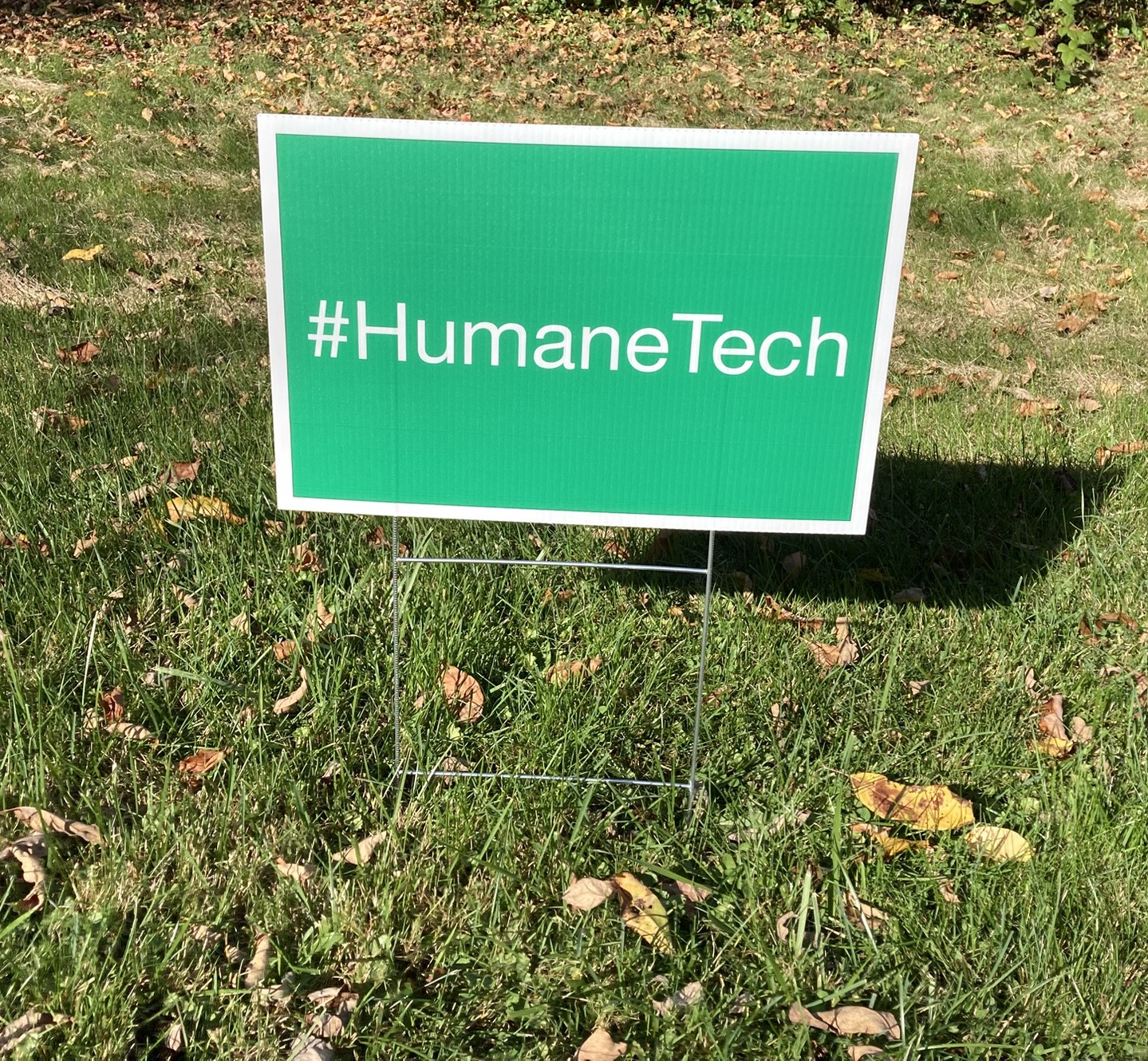
Use and follow #HumaneTech. #HumaneTech shwag is hard to find (but shouldn’t be). Make your own! Use a create-your-own-tee-shirt site (e.g., Personalization Mall, VistaPrint) to create your own #HumaneTech tee shirt. Plant a #HumaneTech yard sign. Remember, this is a grass-roots movement; a tomato stake and a home-made sign are quite in line with the spirit of it. #HumaneTech can be a GRAIT conversation piece!
-
Obviously, stay out of AA social media; try a social media platform that doesn’t have AA (yes, it does exist, it’s just not as well-known). Caution: Non-AA social media has also been known also have a polarized-society presentation, as content re-shared from AA platforms reverberates into the conversation.
-
Go straight to the source for news, instead of having information, misinformation, and disinformation algorithmically served to you by AA. Identify a few sources of national and local news that you approve for yourself and directly bookmark them in your browser; some news sources even have their own apps for provision of content.
-
It’s good to select news sources so that you end up with a distinction between news and opinion/editorial. While opinion/editorial as a component of a news product is fine, a purported news source that is 100% opinion/editorial or biased in a certain direction isn’t really news. One reason for staying out of AA social media is being better informed; moving to a 100% opinion/editorial/biased news venue isn’t the ideal way to do that.
-
Contact your legislative representation and other leadership (e.g., governor, attorney general) and provide comments on potential/enacted legislation/policy/action that’s intended to deal with inhumane technology, or simply communicate to leadership your concerns about inhumane technology.
-
Join and/or support a #HumaneTech advocacy group.
-
Teach children about what inhumane technology is and about its harms early—long before they are teenagers.
-
 Do you have a relationship with a school that has a presence in AA social media? Schools are supposed to be about strengthening the society of today and the society of tomorrow. It doesn’t make sense if such institutions are enmeshed with technology that does the opposite. Why must a school demonstrate enmeshment with AA social media, while AA social media is harming our youth; a school should be a model. Petition for schools to be smart-phone-free (e.g., requiring certain devices to be checked in to safekeeping at start of school day) and AA-social-media-free (e.g., disallowing a school to require a student to be on AA social media in order to participate in a school activity).
 -
Have a teenager? Driver’s education and passing an exam are required to obtain a driver’s license? Like a car, a smart phone is a powerful device; require your teen to pass a technology exam (covering the potential harms of technololgy and how to avoid them) before allowing them to have a smart phone—like this journalist did.
-
Make some popcorn and watch a movie or TV show that touches on the topic. Watch with a friend. GRAIT.org has a Movie and TV Show List.

-
Pay attention to platforms’ terms of use and privacy policies before agreeing. If terms of use or privacy policy aren’t acceptable, look for a different platform. Go through a platform’s settings and set to your preferences (Opt Outs)—some default settings might not be to your liking.
-
Use a real search engine, not a purported search engine that follows you around or returns results based on who it thinks you are.
-
Share. Share #HumaneTech info and resources. GRAIT.org has a library of shareables (graphics that can be shared with a tap or click).
In the News

GRAIT.org now shares news via BlueSky.
Older shared news is available in GRAIT.org’s News Clip Archive.
Other GRAIT Places to Go From Here
Movie and TV Show ListReading List
Link Library
Legislation
Lawsuits
Shareables
#HumaneTech
This website does not provide medical advice. A link from this website does not represent or imply that information found in that link is endorsed by this website. This website does not represent that its content is accurate, useful, or not harmful.

